Build A Stronger Body —
Not Just A Smaller One
Body composition is about more than losing weight. Preserving and building muscle supports strength, metabolism, mobility, recovery, energy, and long-term health.
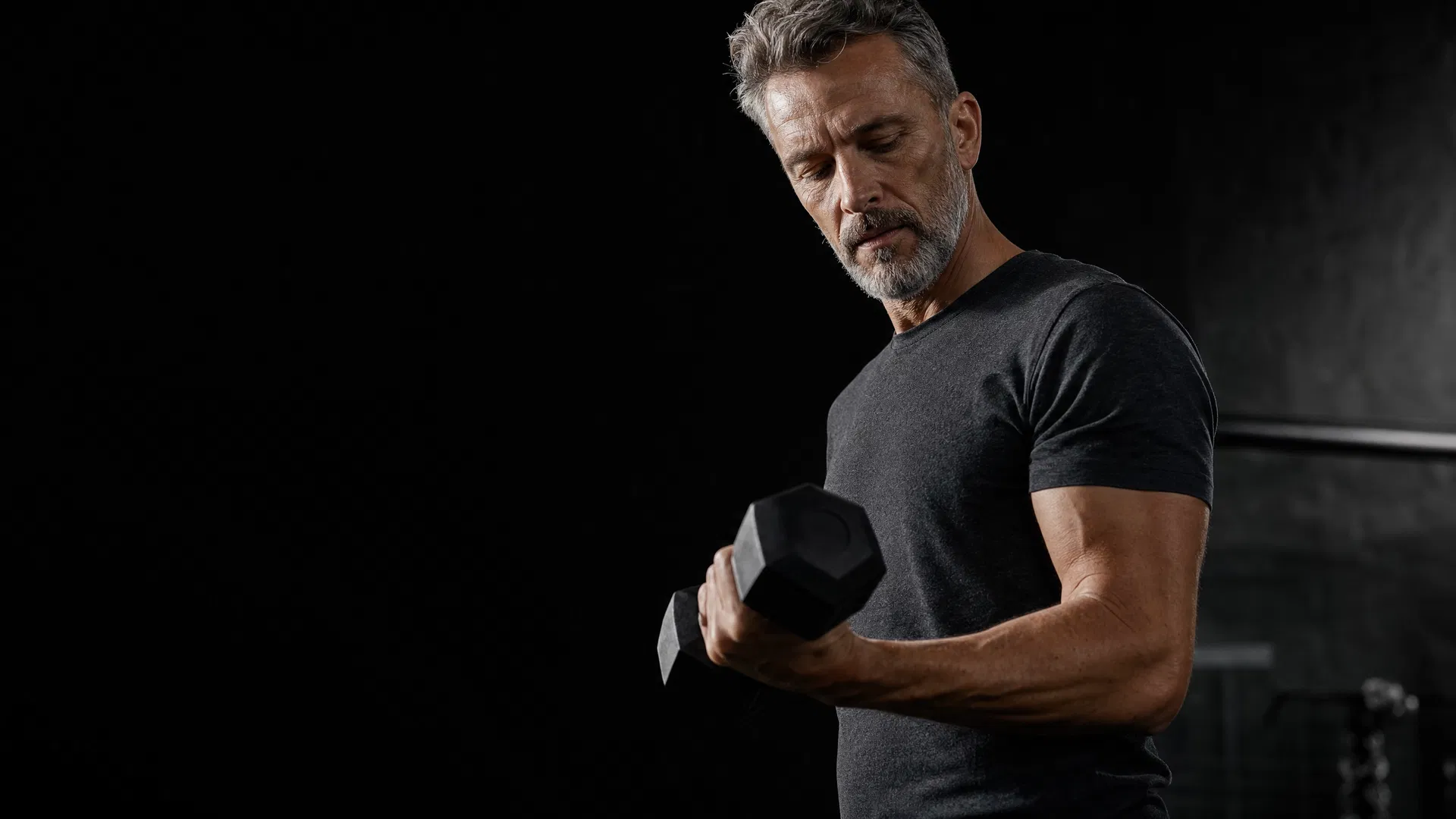
Body composition is about more than losing weight. Preserving and building muscle supports strength, metabolism, mobility, recovery, energy, and long-term health.
When people lose weight quickly — through severe calorie restriction or appetite-suppressing medications — a significant portion of what they lose is not fat. It is muscle. This matters more than most people realize.
Muscle is not just about appearance. It supports your metabolism, keeps you strong and functional, helps you move well, and becomes increasingly important as you age. Losing it during fat loss is a trade-off that can make long-term results harder to maintain.
The scale does not tell you whether you are losing fat or muscle. That distinction is what body composition is about.
"Smaller is not always healthier."
Two people can weigh the same and have very different levels of strength, energy, and metabolic health — depending on how much lean mass they carry. The goal is not just to weigh less. The goal is to build a body that functions better.
What Muscle Supports
Improving body composition does not require extreme workouts, aggressive dieting, or a complete lifestyle overhaul. It requires a few consistent, evidence-based habits applied over time.
"You do not need extreme workouts to improve body composition."
"The goal is sustainability — not exhaustion."
One of the most persistent myths in fitness is that building strength becomes impossible after a certain age. The evidence says otherwise. Adults in their 40s, 50s, 60s, and beyond can meaningfully improve their strength, lean mass, and physical capability — with the right approach.
The key is consistency over perfection. You do not need to train every day or push to exhaustion. You need to show up regularly, apply progressive resistance, and eat enough protein to support the process.
Avoiding all-or-nothing thinking is essential. Missing a workout does not erase progress. A week off does not undo months of work. What matters is the long-term pattern — not any single session.
Strength built in your 40s and 50s is an investment in your 60s, 70s, and beyond.
The benefits extend well beyond the gym. Improved strength supports better posture, easier movement in daily life, greater confidence, and a stronger foundation for everything else — including fat loss.
GLP-1 medications like semaglutide and tirzepatide are highly effective at reducing appetite and supporting significant weight loss. But the rapid weight loss they produce creates a real risk: without the right nutritional support, a meaningful portion of that weight loss can come from muscle rather than fat.
When appetite is suppressed, many people naturally eat less protein — sometimes far less than their body needs to preserve lean mass. Combined with rapid weight loss, this can accelerate muscle loss in ways that are difficult to reverse.
This is not a reason to avoid GLP-1 medications. It is a reason to be intentional about protein intake and resistance training while using them.
The goal is to use the medication's appetite-suppressing effect to create a sustainable calorie deficit — while protecting the muscle that supports your long-term health, metabolism, and physical capability.
Key Considerations for GLP-1 Users
The scale measures one thing: total body weight. It does not tell you how much of that weight is fat, how much is muscle, how much is water, or how your body is actually functioning.
Two people can weigh exactly the same and look, feel, and perform very differently — depending on their body composition. The person with more muscle and less fat will generally have better posture, more energy, a higher resting metabolism, and greater physical capability.
Scale Weight Alone
Body Composition Focus
Muscle improves how your body looks, how it feels, how it moves, and how efficiently it burns energy. It is the foundation of sustainable fat loss — and the reason body composition matters more than the number on the scale.
Build A Healthier,
Stronger Body For The Long Term
Structured coaching focused on sustainable fat loss, strength, muscle preservation, and real-life body composition improvement.