GLP-1s
OBESITY IS BIOLOGICAL.
GLP‑1s can help.
GLP‑1 medications can reduce hunger and support weight loss.
The skills you build determine whether the results last.

GLP-1s
GLP‑1 medications can reduce hunger and support weight loss.
The skills you build determine whether the results last.
GLP-1 Overview
Obesity is not a character flaw. It is not a failure of discipline, laziness, or personal failure.
Biology influences hunger, satiety, energy regulation, weight regain, and metabolic adaptation. For many people, those systems become increasingly difficult to regulate over time. GLP-1 medications help regulate some of those biological drivers. But medication alone does not create long-term success.
For decades, people living with obesity were told they simply needed more willpower. We now understand the biology is far more complex than that. Recognizing obesity as a chronic disease doesn’t remove personal responsibility—it provides a more accurate starting point for solving the problem.
That does not mean weight loss is impossible. It means the challenge is biological, not moral.
Medication can make losing weight more achievable. It cannot decide how much muscle you keep, what habits you build, how you respond when progress slows, or whether you’ll be prepared if your medication changes in the future. Those are skills that still have to be learned.
Long-term success still comes from building the skills and habits that continue working long after the medication changes or ends. The medication creates the opportunity. What you build during that opportunity determines whether the results last.
What Still Applies
GLP-1 medications reduce hunger. They do not replace nutrition awareness, protein intake, resistance training, or sustainable habits. The medication lowers the difficulty. The work still has to happen.
The habits you build while the medication is helping are often the same habits that protect your results later. Muscle preserved today helps support strength, mobility, and metabolism tomorrow.
Every healthy meal and every workout is an investment in the life you’re building—not just the weight you’re losing. The goal isn’t simply to lose weight. It’s to build a way of living you never have to escape from.
Nutrition Still Matters
Protein intake, food quality, and calorie awareness remain foundational. The medication may reduce hunger, but it does not teach nutritional skill or decision-making.
Muscle Preservation Is Critical
Rapid weight loss increases the risk of muscle loss. Resistance training and adequate protein help protect strength, metabolism, mobility, and long-term function.
Habits Determine Outcomes
The habits built while using the medication often determine what happens after dosage reduction or discontinuation. The system matters more than the phase.
YES, YOU STILL HAVE TO DO THE WORK.
For many people, GLP-1 medications make that work feel possible for the first time.
Where Are You Today?
Whether you’re considering medication, already taking it, preparing for life after it, or simply looking for answers, start with the stage that matches where you are today.

Understand what the medication can help with — and what it cannot do for you — before you start.
Continue Reading →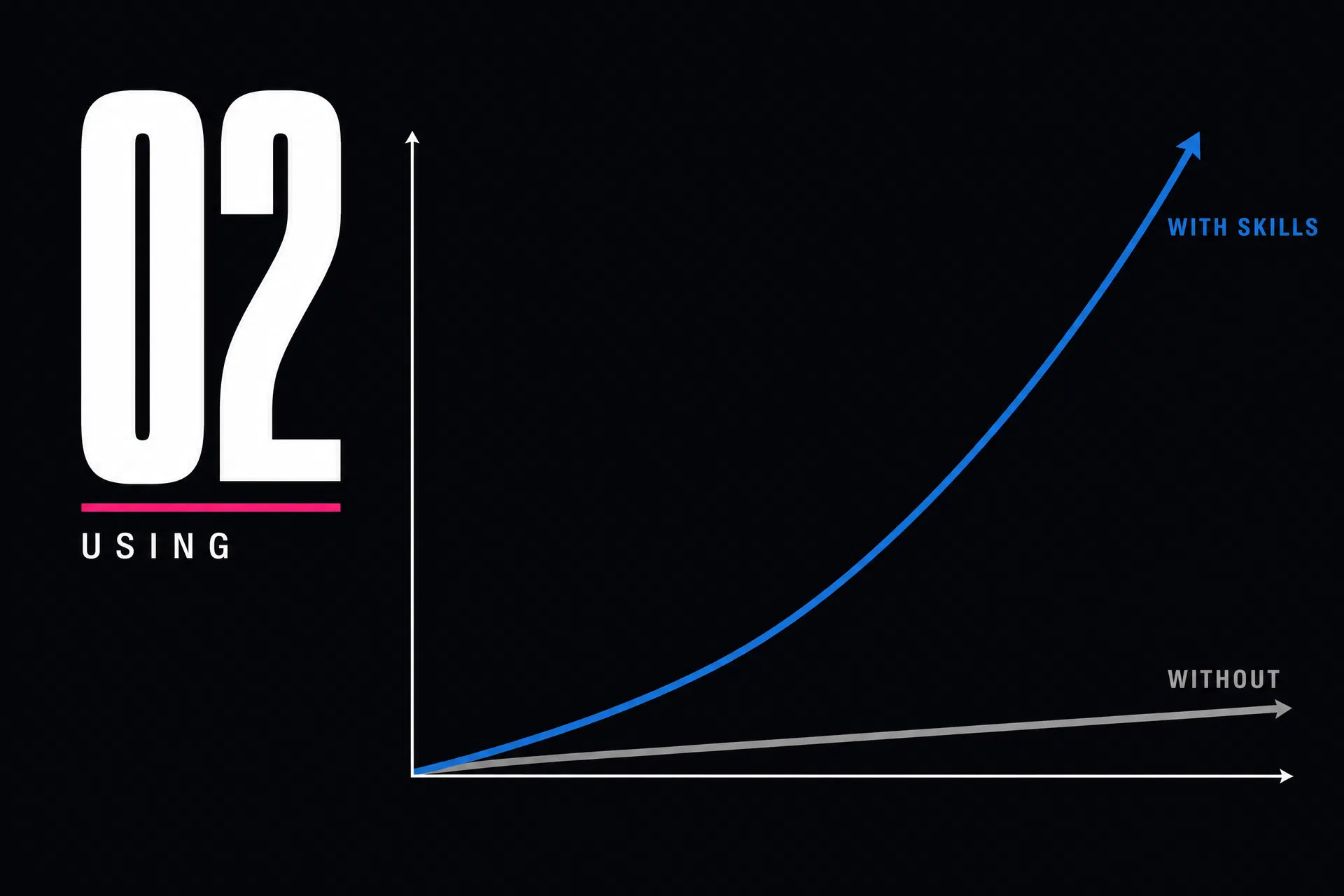
The habits you build while on the medication are the ones that protect your results when it changes or stops.
Continue Reading →
What happens when the medication stops — and the six strategies that protect your results long-term.
Continue Reading →
Straight answers about GLP-1 medications — organized by where you are in the journey.
Continue Reading →Stage 01
Understand what the medication can help with — and what it cannot do for you.
Stage 01 — Know Before You Start
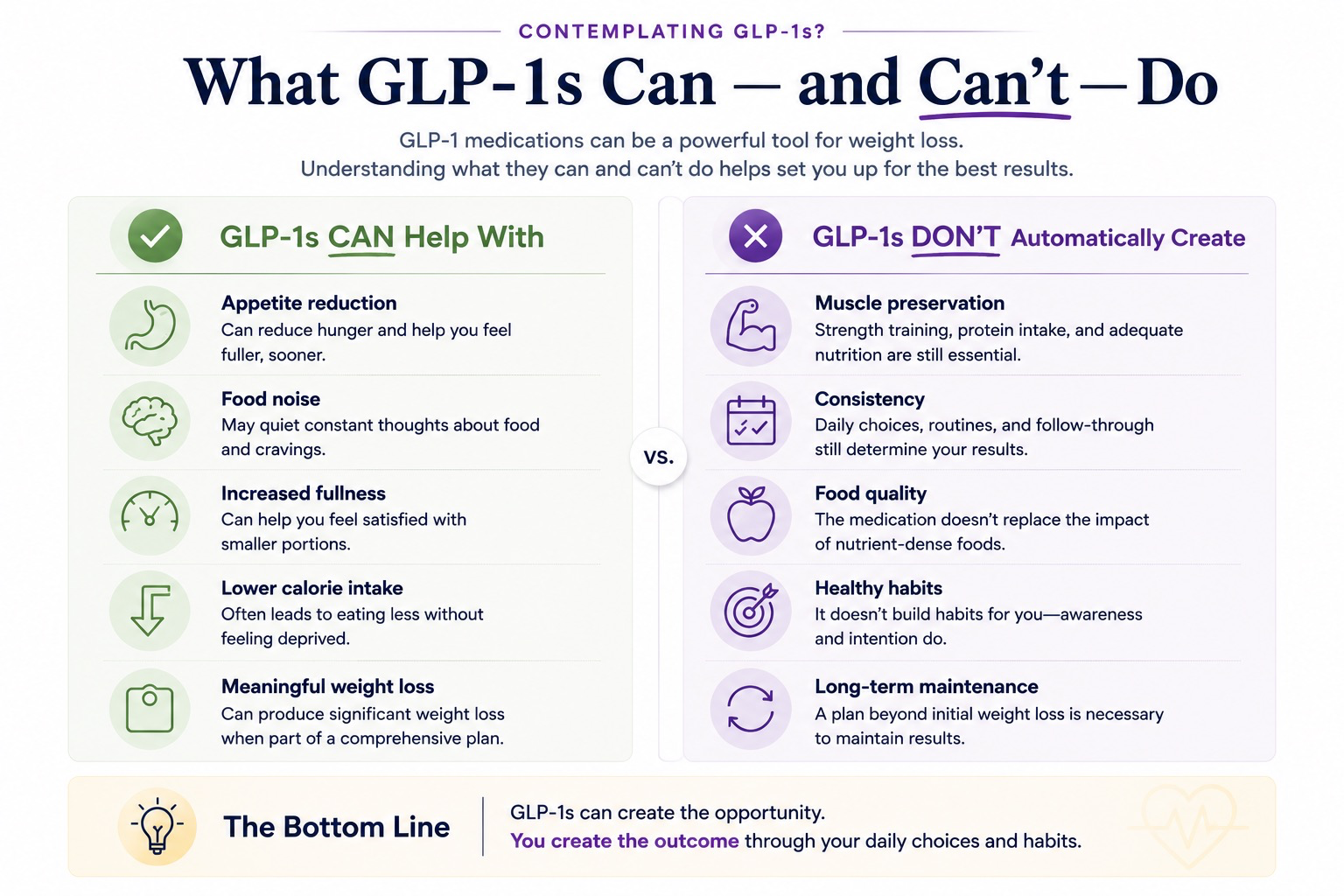
GLP-1 medications are among the most clinically significant tools for weight loss in decades. For many people, they reduce food noise, lower hunger, and make it possible to create a calorie deficit without the constant battle of willpower. That is real, and it matters.
But understanding what they cannot do is just as important as knowing what they can. The chart to the right shows exactly where the medication helps — and where the work is still yours.
Most people start GLP-1s hoping the medication does the work. The ones who keep the results off know it does not.
It reduces hunger. It does not build skills.
That distinction is everything.
Stage 02
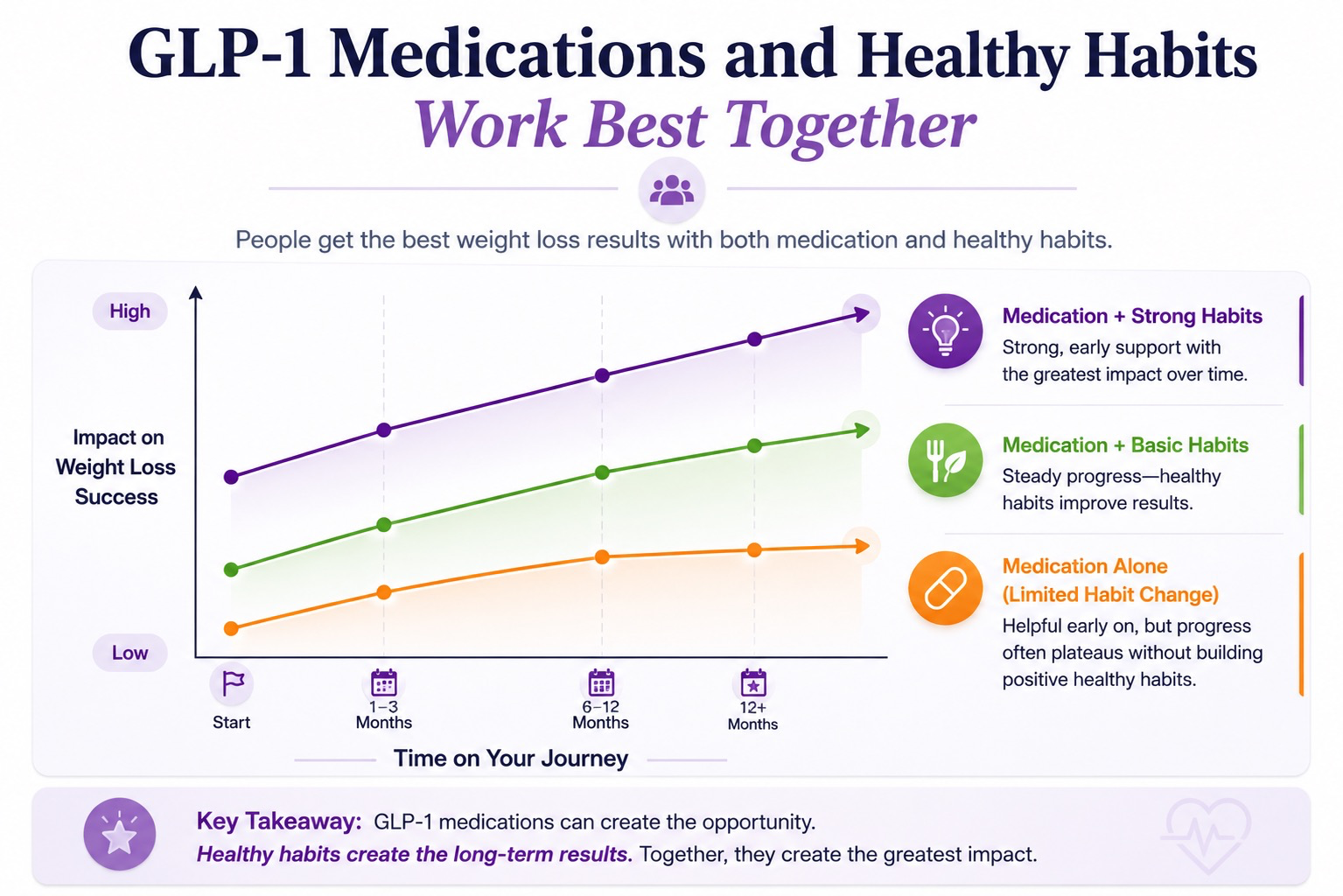
The habits you build while on the medication are the ones that protect your results when it changes or stops.
170 lbs
Lost 170 pounds, from 360 to 190. Tirzepatide became part of my system in February 2024 and remained part of it after I reached goal. I maintain at 190 pounds.
I explored GLP-1s because I wanted to understand them.
For myself. For my clients. For the people I teach.
And for anyone trying to decide whether these medications belong in their journey.
What I found reinforced something I already believed:
Tools matter.
But skills matter more.
I’m not competing with GLP-1s. I’m competing with the finish line.
GLP-1s can be incredibly effective. They can quiet food noise, reduce hunger, and create an opportunity many people have never experienced before.
But opportunity and outcome are not the same thing.
Long-term fat loss is still built on the same foundation:
The skills.
The habits.
The system.
I lost 170 pounds and now maintain at 190 pounds.
The medication helped create the opportunity. It didn’t do the work.
I did.
I tracked calories.
I learned nutrition.
I changed habits.
I built a system I could live with.
Regain involves both biological pressures and behavior.
Behavior still mattered.
Stage 03
What happens when the medication stops — and the six strategies that protect your results long-term.
Why maintenance is not a separate phase.
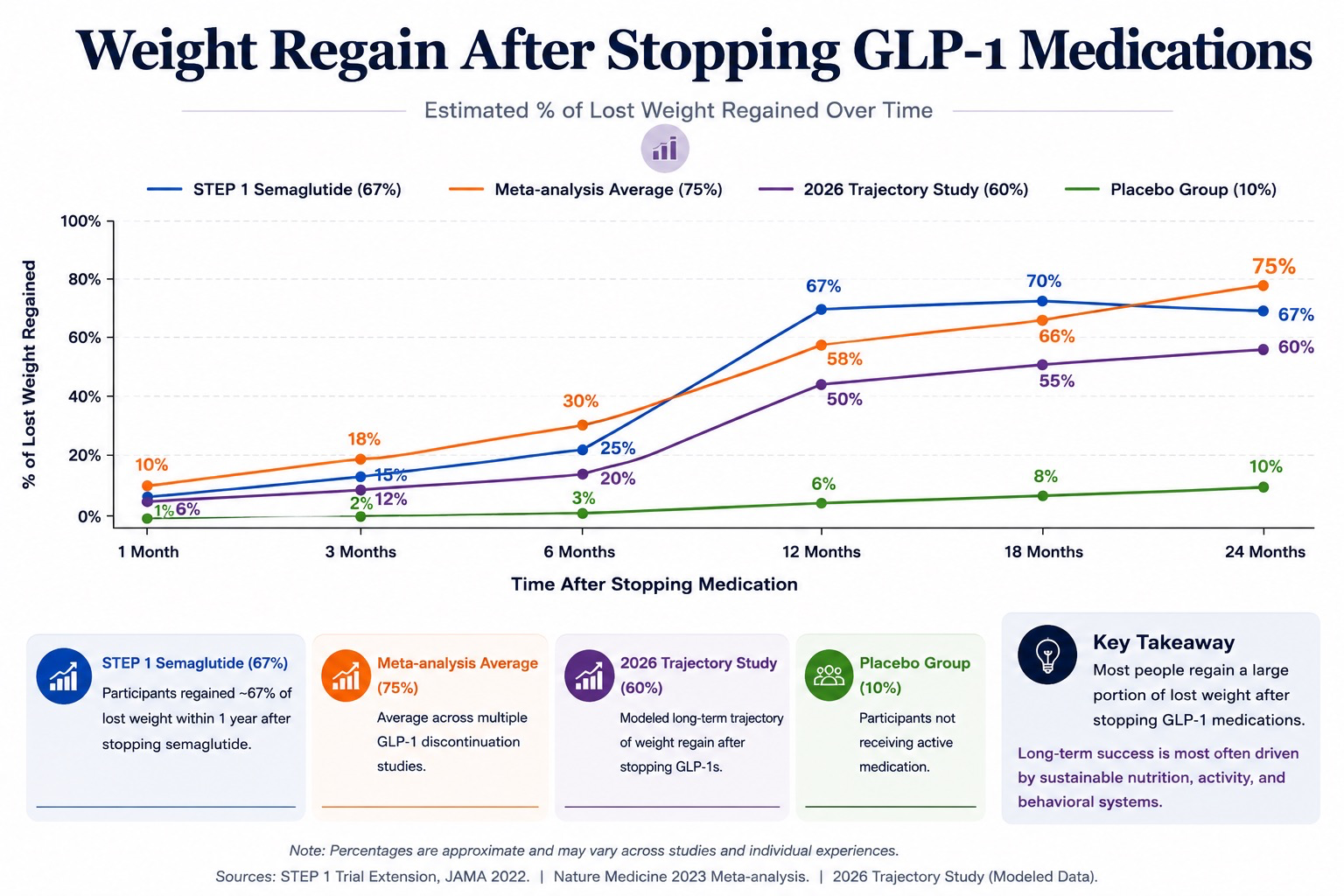
~65%
of weight lost on GLP-1s is regained within one year of stopping without a supporting system.
One of the realities of weight management is that none of us become permanently immune to weight gain.
Biology still has a vote. The environment still has a vote.
The tendency to regain weight doesn’t disappear simply because you’ve lost it. Long-term success comes from building the skills and systems needed to navigate both—not from reaching a point where maintenance becomes effortless.
The question isn’t whether you’ll ever regain weight.
The question is whether you’ll know what to do next.
Stage 03 — The Regain Reality
The research is remarkably consistent: when GLP-1 medications are stopped, significant weight regain is common.
Not because people failed — because obesity is a chronic biological condition. The chart to the right shows the typical regain trajectory.
The body fights back. Hunger returns. Metabolism adjusts.
The people who keep the weight off built something while the medication was working.
Skills. Habits. A system that outlasts the prescription.
That is what coaching builds.
What Makes The Difference
The medication creates the opportunity. Together, we’ll build the skills that help protect your results.
Build Protein Habits Now
High protein intake preserves muscle and helps manage hunger. Build the habit while the medication makes it easier.
Prioritize Resistance Training
Muscle mass is your metabolic engine. The more you preserve, the more resilient your metabolism is after stopping.
Build Calorie Awareness
Track your food long enough to understand what you’re eating. This awareness is your tool when the medication is gone.
Create Sustainable Meal Structure
Consistent meal timing and structure reduce impulsive eating and help manage appetite without relying on medication.
Monitor Early Warning Signs
Catching small weight increases early is far easier than reversing significant regain. Build the habit of regular self-monitoring.
Get Accountability and Support
Long-term maintenance is harder alone. Coaching, accountability, and structure significantly improve outcomes after stopping.
GLP-1 FAQ
Straight answers about GLP-1 medications — organized by where you are in the journey: before you start, while you’re using them, and after you stop.
General
GLP-1 medications mimic a naturally occurring hormone in the body called glucagon-like peptide-1. These medications help regulate appetite, slow stomach emptying, improve blood sugar control, and increase feelings of fullness.
In simple terms: You feel less hungry. You stay full longer. Food noise often decreases. Portion control becomes easier. Blood sugar becomes more stable.
GLP-1 medications are tools — not magic. The best long-term results happen when the medication is combined with structure, nutrition awareness, movement, muscle preservation, and sustainable habits.
GLP-1 medications are typically prescribed for people with obesity, people who are overweight with related health conditions, individuals struggling with long-term weight regain, people with type 2 diabetes, and those who have repeatedly lost and regained weight.
A healthcare provider determines whether the medication is appropriate based on medical history, risk factors, and overall health.
Several GLP-1 medications are available. Common options include semaglutide (Ozempic, Wegovy), tirzepatide (Mounjaro, Zepbound), liraglutide (Victoza, Saxenda), and dulaglutide (Trulicity). Availability, approvals, and indications vary by country and continue to evolve.
GLP-1 medications can be highly effective when used consistently. Many people experience significant weight loss, reduced cravings, improved blood sugar control, better portion awareness, and improved energy and mobility.
Results vary depending on medication type, consistency, nutrition habits, activity level, muscle preservation, and sleep and stress. The medication helps create the opportunity for change. Sustainable results still depend on building skills and habits that can be maintained long term.
For many people, GLP-1 medications are considered safe when prescribed and monitored by a qualified healthcare provider. These medications have been studied extensively in clinical trials and continue to be monitored in real-world use.
Like all medications, there are potential risks and side effects. People should always discuss personal medical history, medications, family history, digestive conditions, thyroid history, and pancreatitis history with their healthcare provider before starting treatment.
Common side effects may include nausea, constipation, diarrhea, bloating, fatigue, reduced appetite, acid reflux, and stomach discomfort.
Side effects are often most noticeable when first starting, after dose increases, when eating too quickly, or after large or high-fat meals. Many side effects improve over time with proper dosing, hydration, slower eating, and food choices.
Most GLP-1 medications are injectable medications taken weekly. Medical providers typically monitor body weight, side effects, blood sugar, digestive tolerance, dosage adjustments, and progress over time.
Successful long-term use often includes regular follow-up appointments, nutrition guidance, movement and resistance training, behavior change support, and tracking and accountability.
Yes — obesity has strong biological components. Body weight regulation is influenced by hormones, appetite signaling, genetics, metabolism, environment, stress, sleep, and food availability.
This does not mean people are powerless. But it does mean long-term weight loss is often more complex than “just eat less.” GLP-1 medications help regulate some of the biological drivers that make fat loss difficult.
Yes. Several GLP-1 medications were originally developed to help improve blood sugar control in people with type 2 diabetes. These medications can improve insulin response, reduce blood sugar spikes, support weight loss, and improve metabolic health markers.
GLP-1 medications have been studied and used clinically for many years. Earlier versions were introduced long before the recent popularity surge. Long-term data continues to grow, especially with newer medications. Current evidence supports their effectiveness and safety for many patients under medical supervision.
Compounded GLP-1 medications are not the same as FDA-approved branded medications. Quality, ingredients, dosing accuracy, and manufacturing standards can vary depending on the source.
People considering compounded medications should work with licensed medical professionals, use reputable pharmacies, ask questions about sourcing and quality, and understand the risks and limitations.
Speak with your primary care provider, an obesity medicine specialist, an endocrinologist, or a qualified telehealth provider. A provider can evaluate medical history, current medications, health risks, goals, and eligibility.
Yes — for many people.
Beginning in 2026, Medicare is expanding access to GLP-1 medications for eligible beneficiaries through a new demonstration program. If you qualify, your out-of-pocket cost may be significantly lower than paying retail prices.
Coverage depends on meeting Medicare’s eligibility requirements, and not every beneficiary will qualify. Like any Medicare benefit, the details may continue to evolve over time.
The most important thing to remember is this: coverage makes treatment more accessible — it doesn’t replace the need for a long-term plan. Medication can reduce hunger, but lasting success still comes from building habits and skills that continue working for years to come.
It will help — but it won’t solve it by itself.
Making GLP-1 medications more affordable means many people who couldn’t previously access treatment now can. That’s a major step forward and has the potential to improve the health of millions of Americans.
But medication isn’t the entire answer. GLP-1s help control appetite. They don’t automatically teach portion awareness, calorie tracking, meal planning, or the maintenance habits needed to keep weight off for life.
The goal isn’t simply to lose weight. The goal is to build a way of living that allows you to keep it off.
Not everyone does. But the people who keep their results long-term are usually the ones who built skills, not just lost weight. A coach helps you build the habits that outlast the medication — so when the medication changes or stops, you have a system that keeps working. See coaching options →
Contemplating GLP-1s
GLP-1 medications may be worth discussing if you’ve repeatedly lost and regained weight, food constantly occupies your thoughts, hunger feels difficult to control, traditional dieting hasn’t been sustainable, or obesity-related health issues are developing.
The decision should involve medical guidance, realistic expectations, long-term planning, and understanding both benefits and risks.
Results vary. Some people notice appetite changes within days, early weight loss within weeks, and more significant changes over several months.
The most successful outcomes usually come from consistency, realistic expectations, patience, improved eating habits, preserving muscle mass, and sustainable systems. Fast weight loss is not always the goal. Long-term maintenance matters more.
The medication helps — but habits still matter. Important lifestyle changes often include learning portion awareness, increasing protein intake, improving food quality, strength training, increasing daily movement, tracking progress, improving sleep, and managing stress.
GLP-1 medications can be more effective than traditional dieting alone for many people because they help regulate appetite and food drive biologically. However, they are not the only option.
Other approaches may include nutrition coaching, structured calorie management, behavior change programs, exercise programs, bariatric surgery, and medical nutrition therapy. The best approach depends on the individual.
Some medical conditions may require caution or make these medications inappropriate. Examples may include certain thyroid conditions, pancreatitis history, digestive disorders, gallbladder disease, pregnancy, and medication interactions. A healthcare provider should review personal medical history before starting treatment.
Cost is an important consideration. Coverage varies widely depending on insurance plans, diagnosis, employer coverage, medication type, and location. Some medications can be expensive without coverage.
Before starting, it’s smart to think about long-term affordability, sustainability, access consistency, backup plans, and transition strategies if coverage changes.
Using GLP-1s
Tracking can still be extremely valuable. GLP-1 medications often reduce appetite, but they do not automatically teach portion awareness, calorie awareness, protein intake, maintenance habits, or long-term self-management.
Tracking creates awareness and helps prevent accidental under-eating, overeating, or muscle loss. The goal is not obsessive perfection. The goal is learning.
Yes. GLP-1 medications reduce appetite and food noise for many people, but they do not eliminate the ability to overeat. Eating too quickly, eating past fullness, or choosing calorie-dense foods can still result in excess calorie intake.
The medication lowers resistance. It does not remove the need for awareness and decision-making.
Most people benefit from focusing on protein-rich meals, fiber-rich foods, fruits and vegetables, hydration, minimally processed foods, and consistent meal structure.
Protein becomes especially important because reduced appetite can lead to reduced protein intake — which increases the risk of muscle loss.
Exercise is strongly recommended. Resistance training is especially important because rapid weight loss can increase the risk of muscle loss.
Movement also supports metabolic health, mobility, strength, confidence, and long-term maintenance. You do not need extreme workouts. Consistency matters more than perfection.
Weight loss is rarely perfectly linear. Plateaus are normal. Common reasons progress slows include adaptation over time, reduced calorie burn from a smaller body size, inconsistent habits, reduced movement, stress and sleep issues, and gradual calorie increases.
Progress should be evaluated over weeks and months — not day to day.
Managing side effects often involves eating smaller meals, slowing down while eating, staying hydrated, avoiding overeating, monitoring trigger foods, and communicating with your provider.
Never adjust medication dosing without medical guidance. A slower, sustainable approach is often better tolerated than rushing increases.
Regular monitoring is important. Helpful areas to monitor include body weight, energy levels, protein intake, hydration, muscle preservation, digestion, habits, and emotional relationship with food.
Long-term success usually improves when people have accountability, structure, education, and follow-up support.
Muscle preservation is critical. The biggest priorities are eating enough protein, resistance training consistently, avoiding aggressive under-eating, staying active, and recovering properly.
The goal is weight loss — done in a way that protects your muscle, so the results are easier to keep.
Follow the medication guidelines provided by your healthcare provider and pharmacy instructions. Do not double-dose unless specifically instructed.
If you miss a dose: review the medication instructions, contact your provider if unsure, and resume safely according to guidance. Consistency matters, but occasional mistakes happen.
Maintenance
Weight regain can happen after stopping GLP-1 medications. This is one reason why learning sustainable habits matters. The medication may reduce hunger and food noise while taking it. When it is removed, appetite may increase again.
Long-term success improves when people develop calorie awareness, protein habits, movement routines, structure, self-monitoring skills, and realistic expectations.
A successful transition often involves slowing the process gradually, maintaining protein intake, continuing resistance training, monitoring body weight trends, maintaining structure and routines, and staying aware of appetite changes.
This is where many people benefit from coaching, accountability, and a maintenance strategy.
Hunger often increases to some degree after stopping medication. That does not mean failure. It simply means the biological appetite suppression is reduced.
People who have built systems and awareness before stopping are often more prepared to manage those changes.
Long-term maintenance usually depends on consistency, realistic habits, monitoring trends early, maintaining muscle mass, movement, protein intake, and flexibility instead of perfection.
The goal is building a lifestyle you can realistically sustain.
Early signs may include increased snacking, loss of structure, avoiding weigh-ins, increased food noise, declining activity, portion sizes slowly increasing, and emotional eating patterns returning.
Catching small changes early is easier than trying to reverse major regain later.
Do not panic. Small fluctuations are normal. The best response is usually to increase awareness early, tighten routines, review habits honestly, increase movement consistency, revisit calorie awareness, and seek support if needed.
Weight regain is information — not failure.
There is no single answer. Some people may benefit from long-term use. Others may eventually transition off successfully.
The right approach depends on health status, obesity history, appetite regulation, sustainability, side effects, affordability, and long-term goals. This should always be discussed with a qualified healthcare provider.
WHAT MAKES THE DIFFERENCE
The medication creates the opportunity. What you build during that opportunity determines whether the results last.
Because the medication changes hunger—but it doesn’t teach you how to live at your new weight.
What coaching helps build:
Lasting success isn’t determined by the prescription. It’s built by what you do while the prescription creates the opportunity.
“The medication helped me lose the weight. Brian taught me how to keep it. I’ve been off the medication for eight months. My weight hasn’t come back—because the system I built while I was on it is still working. That’s what I didn’t expect. I thought the medication was doing the work. It turned out I was.”
— Robert, age 48
SOME COACHES READ
THE RESEARCH.
I ALSO LIVED IT.
TRACK. LEARN. SUCCEED.
GLP-1 medications should be used under the guidance of your healthcare provider. I help you build the skills that make results sustainable.