Muscle & Long-Term Health

MUSCLE MATTERS.
BUILD IT FOR A HEALTHIER LIFE.

Muscle protects your metabolism, your mobility, and your independence — now and for decades to come.
Muscle and long-term health — strength training and body composition — The Diet Rebel
Muscle Overview The Goal Is Still Weight Loss. But How You Lose It Changes Everything.

Muscle Overview

Let’s get that out of the way first.

The goal is weight loss. It was my goal when I started at more than 360 pounds. It’s the goal for most people who come here. And it’s probably your goal too.

But one of the biggest mistakes people make is assuming all weight loss is the same.

It isn’t. When calories are too low, protein is too low, and resistance training is absent, the body doesn’t just burn fat. It can give up muscle too.

The scale goes down. But the approach breaks.

Maintenance calories drop. Strength declines. The risk of regain increases. Losing weight the wrong way makes keeping it off harder.

That’s why I am very, very pro-muscle.

Not to look athletic. Because muscle is one of the most powerful tools you have for losing weight well — and keeping it off for good.

Lose the weight. Keep it off. Build a healthier life.

That’s what this page is about. Four pillars. One system. Built for people who want results that last.

Muscle & Long-Term Health · Pillar 01

Preserve & Build Muscle. Protect What Matters.

Lean mass supports strength, metabolism, mobility, and long-term function. Protecting it during fat loss and aging is non-negotiable.

Pillar 01

Muscle Matters.

When you lose muscle — you damage your metabolism, reduce your strength, and make future fat loss harder.

Preserving and building muscle during fat loss is not about looking athletic. It is about protecting your metabolism, your mobility, your strength, and your independence — the things that determine your quality of life for decades to come.

What protecting muscle during fat loss requires:

Adequate protein intake
The single most important dietary variable for preserving lean mass during a deficit.
Resistance training
Even two sessions per week makes a measurable difference in muscle retention.
A moderate calorie deficit
Meaningful but not aggressive enough to trigger muscle breakdown.
Sufficient sleep and recovery
Where muscle repair actually happens — non-negotiable.
Patience
Muscle preservation is a process, not a switch.
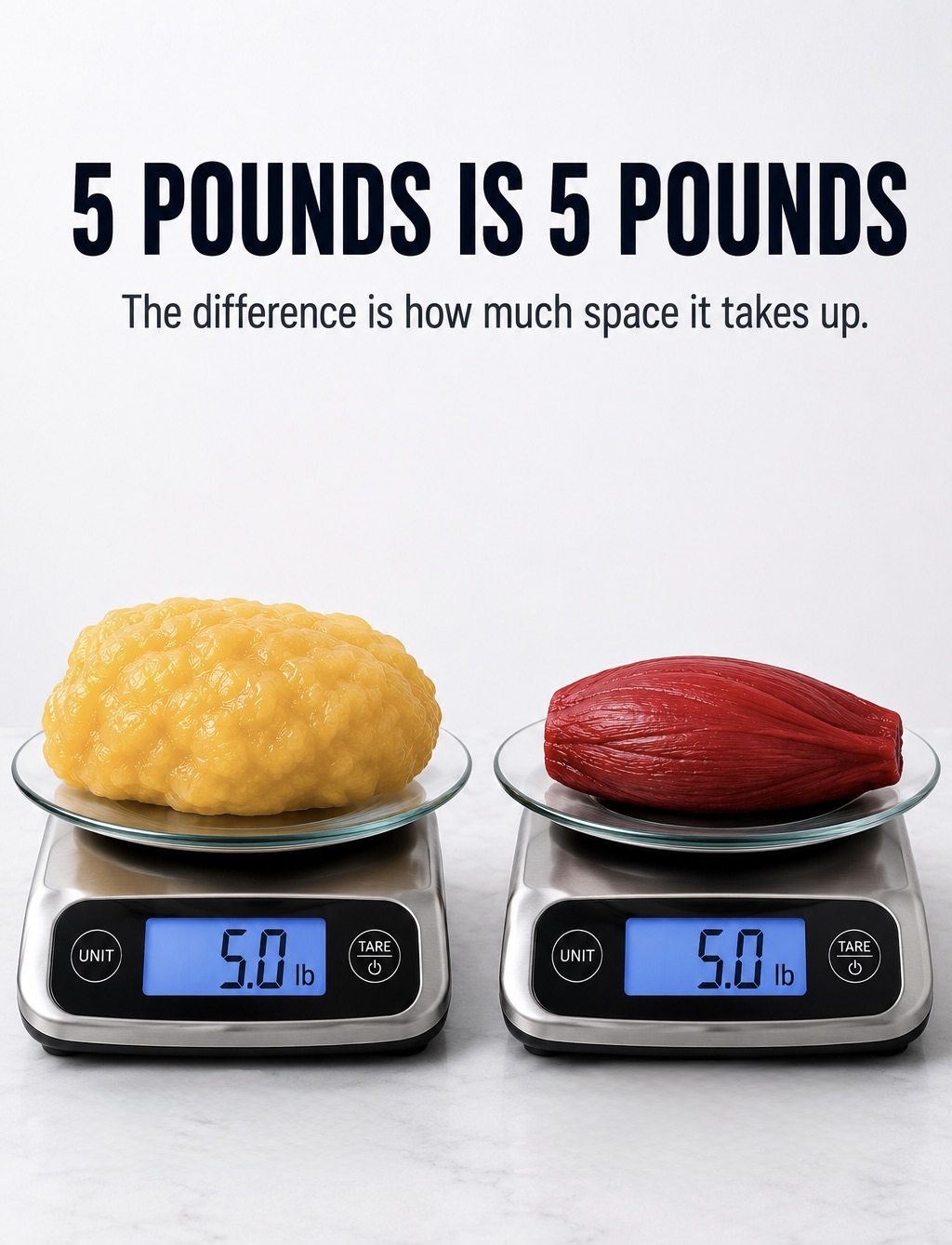
5 pounds of fat vs 5 pounds of muscle — same weight, dramatically different volume — The Diet Rebel
FAT vs. MUSCLE
Pillar 01 · In Practice

Why Most People Lose Muscle Without Knowing It.

Muscle loss during weight loss happens when protein is too low, the calorie deficit is too aggressive, resistance training is absent, or sleep is consistently poor. Any one of these factors can accelerate muscle breakdown. All four together make it nearly inevitable.

The solution is not complicated. It is doing the basics consistently.

Enough protein. Resistance training. A moderate calorie deficit. Adequate sleep. These four variables, applied consistently over time, protect muscle while fat comes off.

You do not need to train like an athlete. You need to train consistently enough to send your body one clear signal: keep the muscle.

Muscle is the foundation.Protein is what you build it with.

Muscle & Long-Term Health · Pillar 02

Protein. The Most Important Macronutrient.

Protein is the most important macronutrient for body composition. It supports fullness, muscle preservation, recovery, and healthier aging.

Pillar 02

Protein Does More Than Build Muscle.

Most people underestimate protein. And most people are eating far less of it than they think.

Protein is the most satiating macronutrient — it keeps you fuller longer, reduces cravings, and supports consistent calorie control. It also has the highest thermic effect of any food, meaning your body burns more calories digesting it than carbohydrates or fat.

During fat loss, protein is the primary defense against muscle breakdown. During aging, it is the primary defense against sarcopenia. At every stage of life, it is the macronutrient that matters most for body composition and long-term health.

"If you only change one thing about your nutrition, make it protein. Everything else builds on that foundation."

What adequate protein does for you:

Preserves muscle during fat loss
Protects lean mass during caloric restriction — the primary defense against muscle breakdown.
Supports muscle repair and growth
After resistance training, protein is the raw material for recovery and adaptation.
Reduces hunger
The most satiating macronutrient — supports consistent calorie control without obsessive restriction.
Slows sarcopenia
Age-related muscle loss accelerates after 60. High protein intake is the primary defense.
Supports immune function and bone density
Metabolic health, immunity, and skeletal strength all depend on adequate protein intake.
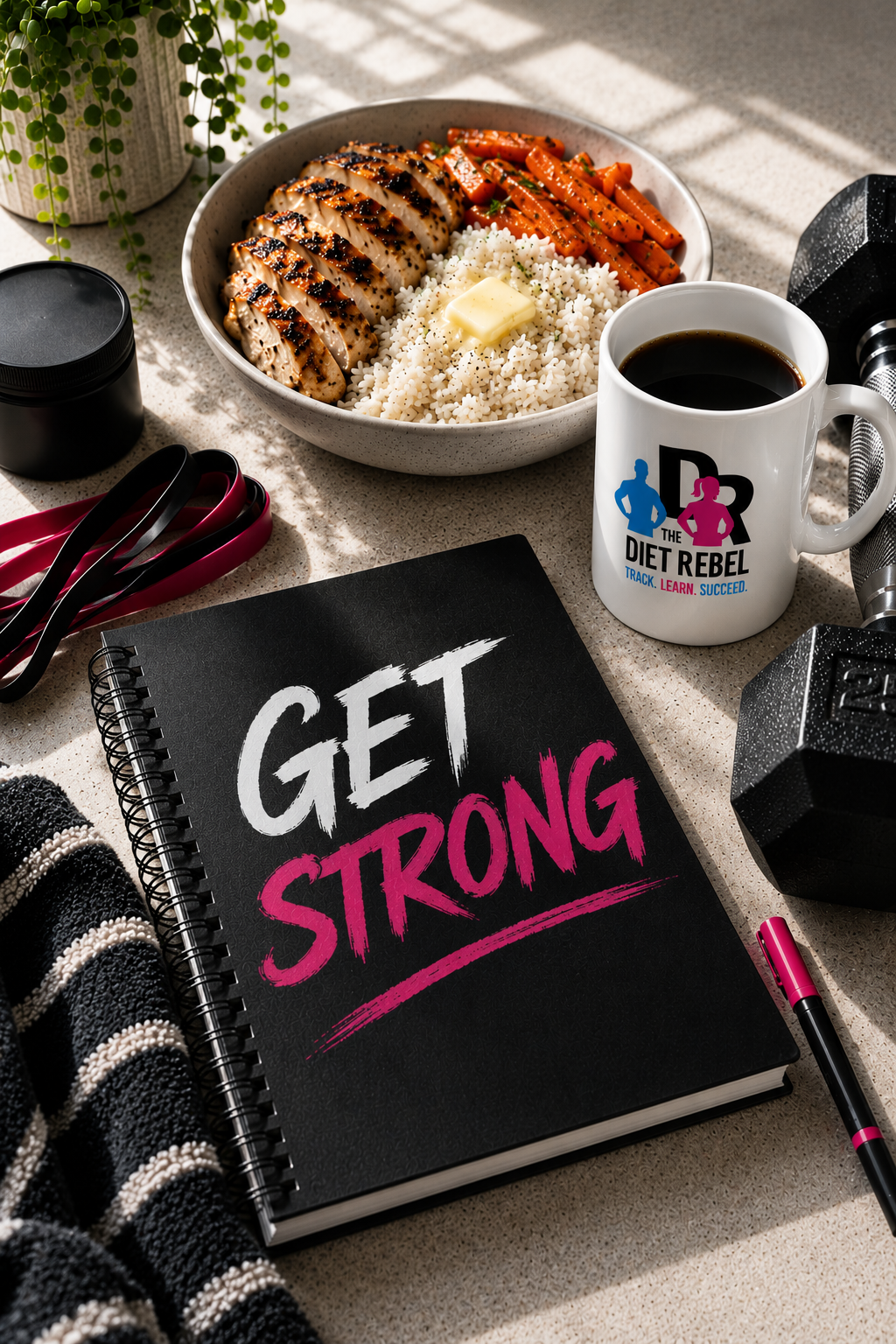
Get Strong — protein-rich meal with Diet Rebel branding — The Diet Rebel
Protein · The Foundation of Body Composition
Pillar 02 · In Practice

How to Hit Your Protein Target.

The target is 0.7–1 gram of protein per pound of body weight per day. For most people, this is significantly more than they currently eat — and requires a deliberate approach to hit consistently.

The most effective strategy is to anchor every meal with a protein source first, then build the rest of the meal around it. This single habit — protein first — makes hitting your daily target far more achievable without obsessive tracking.

The three-step approach that makes protein work:

1.
Anchor Every Meal
Start with a protein source — chicken, fish, eggs, Greek yogurt, cottage cheese, lean beef. Build the rest of the meal around it.
2.
Track for Awareness
Log your protein for two weeks. Most people discover they are eating 40–60% of their target. Awareness is the first step to correction.
3.
Distribute Throughout the Day
Protein synthesis is maximized when intake is spread across meals — not concentrated in one. Aim for 30–50g per meal, 3–4 times per day.

What you eat matters.How you move matters too.

Muscle & Long-Term Health · Pillar 03

Move for Life. Consistency Over Intensity.

Walking, resistance training, and consistent movement support long-term health far more than extreme workouts or punishment cardio.

Pillar 03

The Best Workout Is the One You'll Actually Do.

Extreme workouts are not the answer.
Consistent movement — for life — is.

The fitness industry sells intensity. But the research is clear: moderate, consistent movement — walking, resistance training, daily activity — produces better long-term outcomes than extreme programs that most people abandon within weeks.

Two resistance training sessions per week is enough to preserve muscle during fat loss. Three is optimal for most people. The specific exercises matter less than the consistency. And walking — often dismissed as "not real exercise" — is one of the most powerful tools available for fat loss, cardiovascular health, and longevity.

You don't need to train hard every day. You need to move consistently — for the rest of your life. That's the standard.

What a sustainable movement practice looks like:

Resistance training
Any format that challenges your muscles — the specific exercises matter less than the consistency.
Steps
Walking is underrated and evidence-backed for fat loss, cardiovascular health, and longevity.
Progressive overload
Gradually increasing challenge over time — the mechanism behind long-term adaptation.
Recovery built in
Rest is where adaptation happens — not an afterthought, a requirement.
Enjoyment
If you hate it, you won't sustain it. Find movement you can do for decades.
Walking for life — consistent movement for long-term health — The Diet Rebel
Move for Life
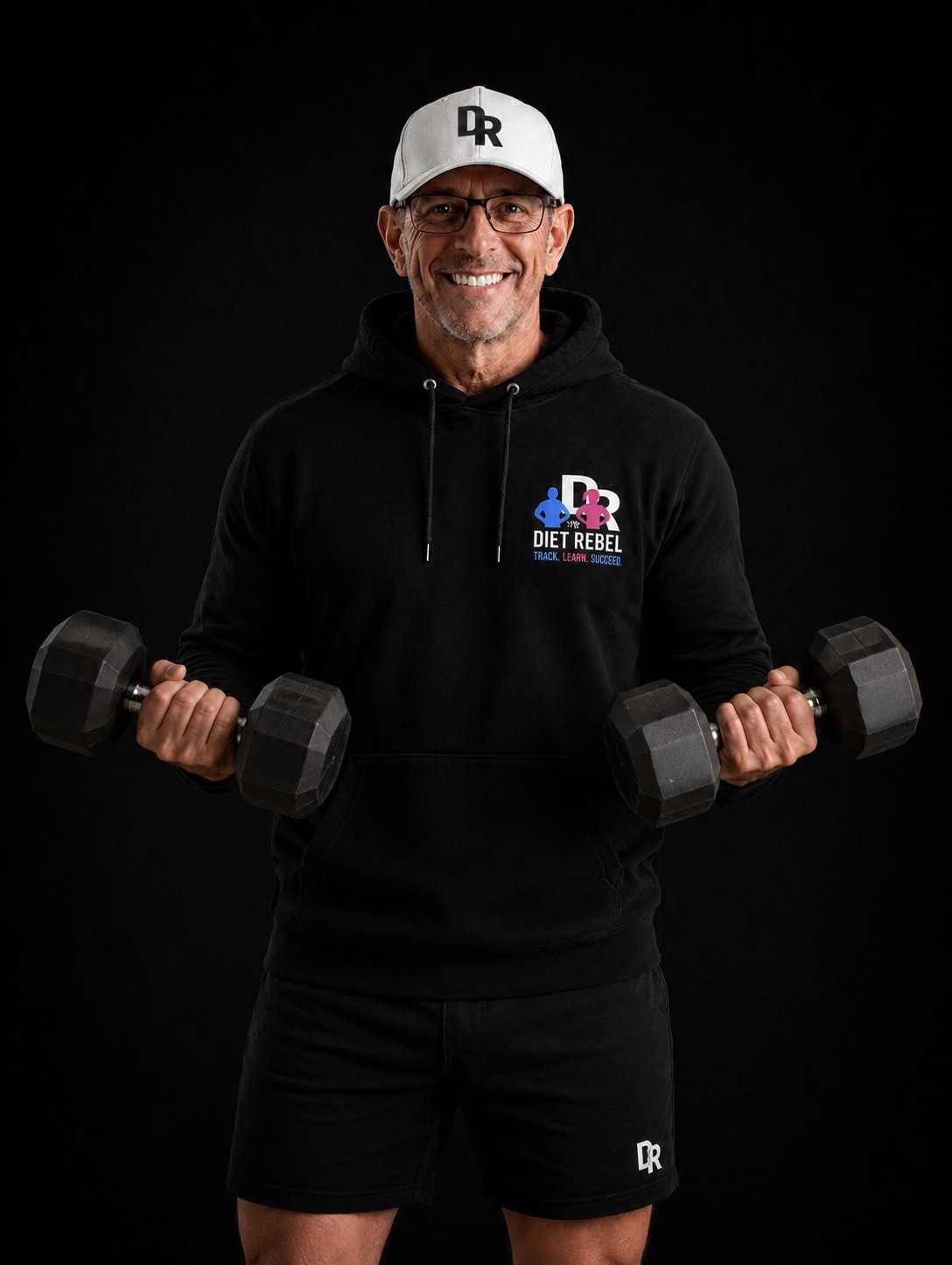
Brian Lee holding dumbbells — The Diet Rebel — muscle matters
The Coach · Muscle Matters
Pillar 03 · In Practice

Why Most Exercise Programs Fail.

The problem with most exercise programs is not the exercises. It is the design. Programs built around maximum intensity, daily commitment, and perfect execution are designed for ideal conditions — not real life.

Real life includes travel, illness, work stress, family obligations, and bad weeks. A movement practice that cannot survive those conditions is not a practice — it is a temporary experiment.

What makes movement sustainable:

It fits your schedule
Not an ideal version of it — the real one, with travel, stress, and bad weeks included.
A minimum effective dose you can always hit
The floor that keeps the habit alive when conditions are not ideal.
Activities you genuinely enjoy
Enjoyment is not optional — it is the mechanism of long-term adherence.
A recovery strategy built in
Not added as an afterthought — rest is where adaptation happens.
Designed to last decades — not weeks
The standard is sustainability across years, not optimization across a 12-week program.

"You do not need bodybuilding workouts. You do not need perfection. You do not need to optimize hypertrophy."

You need 2–4 resistance sessions per week. Enough protein to support muscle. Walking and daily movement. Consistency over intensity. Repeatable behaviors, not heroic phases.

Protect strength. Maintain capability. Support long-term fat loss.

Movement should not be punishment.It is the investment that pays off every decade after this one.

Muscle & Long-Term Health · Pillar 04

Age Strong. Muscle Is a Long-Term Investment.

Muscle, mobility, energy, balance, and independence become more important with age — not less. The time to build them is now.

Pillar 04

The Body You Build Now Determines How You Age.

Aging is not something that happens to you.
It is something you prepare for — or don't.

Sarcopenia — the age-related loss of muscle mass and strength — begins in your 30s and accelerates after 60. By the time most people notice it, they have already lost years of functional capacity. The research is unambiguous: the best time to build muscle is now.

Muscle is not just about aesthetics. It is about independence. The ability to carry groceries, climb stairs, get up from the floor, recover from illness, and maintain quality of life into your 70s, 80s, and beyond — all of it is tied to how much muscle you carry and maintain.

"The goal is not to be the fittest person in the gym at 40. It is to be the most functional, independent person you know at 80."

What aging strong requires:

Consistent resistance training
The most powerful anti-aging intervention available — more evidence-backed than any supplement.
High protein intake
Especially critical after 50, when muscle protein synthesis becomes less efficient.
Mobility and balance work
Fall prevention is a legitimate health priority — one that compounds in importance with age.
Adequate sleep
Where growth hormone is released and muscle repair occurs — non-negotiable at every age.
A long-term perspective
This is a decade-long investment, not a 12-week program. The frame changes the decisions.
Stone path at golden hour with rainbow — Age Strong — The Diet Rebel
Age Strong · Muscle Is a Long-Term Investment
Pillar 04 · In Practice

What Changes When You Think Long-Term.

Most fitness and fat loss programs are designed around short-term outcomes. Lose 20 pounds in 8 weeks. Get beach-ready by summer. These goals are not inherently wrong — but they produce short-term behaviors that often undermine long-term health.

When you shift the frame to aging well — to being strong, mobile, and independent at 70 — the decisions change. You stop skipping resistance training because it doesn't burn as many calories as cardio. You stop eating too little protein because you're afraid of calories. You stop treating rest as laziness.

The long-term frame is not less motivating. It is more motivating. Because the stakes are higher — and the actions required are clearer.

"Every session, every protein-rich meal, every good night of sleep is a deposit into the account that pays out when you are 75 and still doing the things you love."

Healthspan

Lifespan Matters.
Healthspan Matters More.

The goal is not just a smaller body. The goal is a stronger, more capable body that can carry you through the next decade and beyond.

35%
Per Decade

Estimated muscle mass adults may lose per decade after age 30 without consistent strength training.

60+
The Critical Stage

The stage of life where muscle, balance, and recovery become even more important to protect independence and quality of life.

Consistency
The Real Driver

The real driver of aging strong is not extreme workouts. It is repeated strength, protein, movement, and recovery habits over time.

Principles

What Aging Strong
Actually Looks Like.

Not extreme. Not complicated. These are the principles that separate people who age well from those who do not.

01
Consistency over intensity.
A moderate workout you do every week beats an extreme program you quit after two months.
02
Protein first, every meal.
Build meals around protein sources before adding everything else. Especially critical after 50.
03
Strength is a skill.
It improves with practice. Starting at 50, 60, or 70 still produces meaningful, measurable results.
04
Recovery is not optional.
Sleep, hydration, and rest days are part of the system, not a break from it.
05
Small habits compound.
Daily movement, adequate protein, and consistent sleep produce results that feel invisible week-to-week but transformative year-to-year.

Muscle & Long-Term Health

BUILD IT.
PROTECT IT.
KEEP IT.

Muscle is not a vanity metric. It is the most reliable predictor of long-term health, independence, and quality of life. More predictive than weight alone. More actionable than genetics. More durable than any short-term program.

The time to start is not after the next diet, not when conditions are ideal, not at the start of the new year. The body you build in the next year is the body you will live in for the next decade.

The Four Pillars

Preserve & Build

Protect lean mass during fat loss. Build strength that lasts.

Protein

Adequate protein intake is non-negotiable for muscle preservation and metabolism.

Move for Life

Resistance training and daily movement compound over years, not weeks.

Age Strong

The behaviors applied consistently produce outcomes no 12-week program can match.

Muscle & Long-Term Health

"I came to Brian wanting to lose weight. What I actually got was a complete rethink of what health means. I'm stronger now than I was at 35 — and I'm 52. That wasn't the plan. It became the plan."

I DIDN'T JUST STUDY THIS.
I'M LIVING IT.

TRACK. LEARN. SUCCEED.